Front porch, entry & garage door
Adding Stone Veneer Foundation Wainscot vs Full-Height Siding: Where It Works
By ExteriorRender AI · Curb appeal & facade remodeling comparisons
Published · Updated
Tall exposed poured concrete slab foundations, uneven sloped yards, and high-splash front beds often leave houses feeling perched precariously on grey blockwork. Adding natural basalt or stacked limestone stone veneer along the foundation skirt or lower third of a front porch grounds the home visually into the landscape—yet sticking random patches of fake stone just onto isolated garage corners can look tacked-on and choppy.
Anchoring tall foundations & dark modern elevations
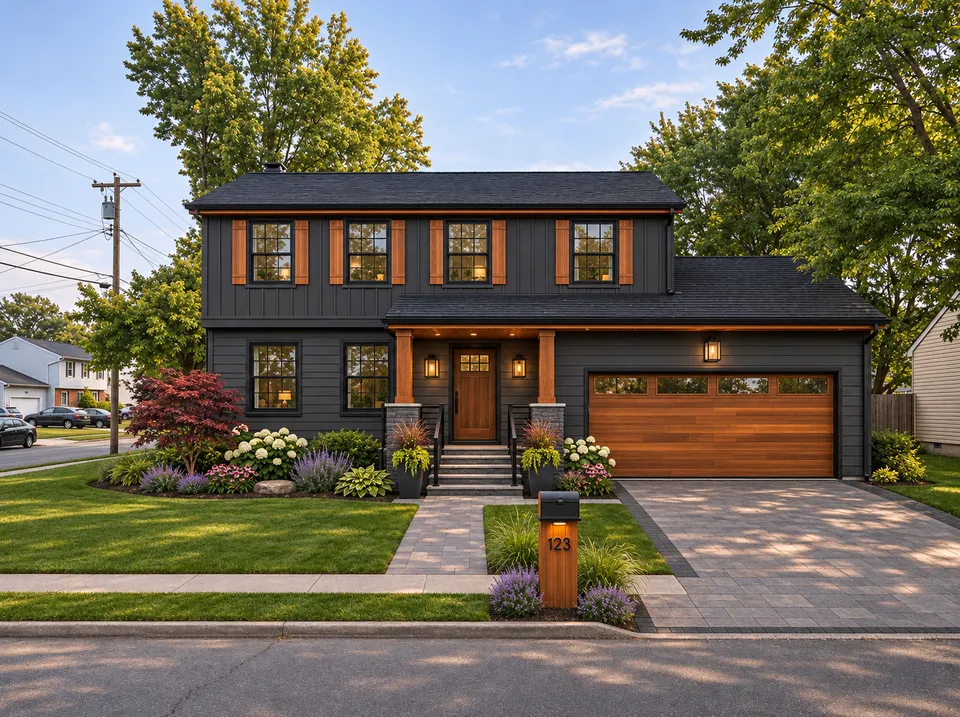

Weathered home → Charcoal & Cedar matte siding & red cedar accents
Deep matte charcoal siding balanced by glowing red cedar porch soffits, modern wood-plank garage door, and basalt lower porch veneer.
Illustrative AI exterior concept on a reference weathered two-story house · Always test physical siding boards & paint swatches outdoors before renovating · 2026-11-22
Now test this palette on your own home
Start with a level street-view photo showing roof peak and front porch.
Notice in Charcoal & Cedar how dark split basalt stone along the porch base anchors deep charcoal siding cleanly onto front steps while absorbing garden splash naturally. Similarly on Limewashed Brick, retaining natural grey-blue slate or stone treads keeps chalky bright brick crisp and tidy near planting beds.
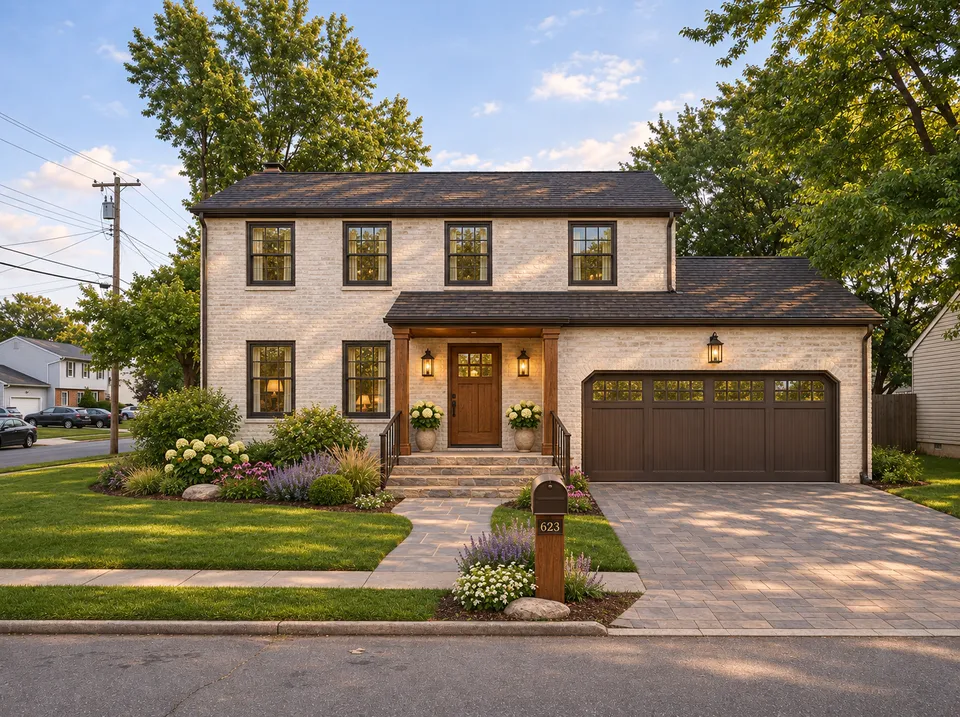
Weathered home → Limewashed Brick chalky finish & oak door
Soft off-white limewashed masonry paired with dark bronze gutters, a warm stained oak door, and stone porch steps.
Illustrative AI exterior concept on a reference weathered two-story house · Always test physical siding boards & paint swatches outdoors before renovating · 2026-11-22
Three golden rules before turning on Stone veneer
Toggle Stone veneer in Add details inside ExteriorRender AI and judge your generated output against three architectural tests: 1. Wrap around building corners properly: In real remodeling, manufactured or natural stone veneer should terminate thoughtfully at an inside wall corner or run seamlessly onto side elevations—never cut abruptly off along a crisp outside front corner like thin wallpaper! 2. Avoid the "multi-material sampler platter": Never stack horizontal lap siding + gable board-and-batten + cedar shakes + heavy stone wainscot on one small front wall. Limit your facade cleanly to two complementary wall textures plus crisp window trim. 3. Mind concrete flashing sill overhang: Confirm stone cap ledges clear existing window wells, exterior dryer vents, hose bibs, and basement casements smoothly before estimating square footage.
Run one test with Stone veneer enabled and one keeping continuous clean cladding in ExteriorRender AI to spot whether grounding stone genuinely improves foundation scale on your lot.
Further exterior reading
- Architectural Digest — Residential Stone & Siding DetailingAnchoring multi-story masonry foundations cleanly against siding materials.